
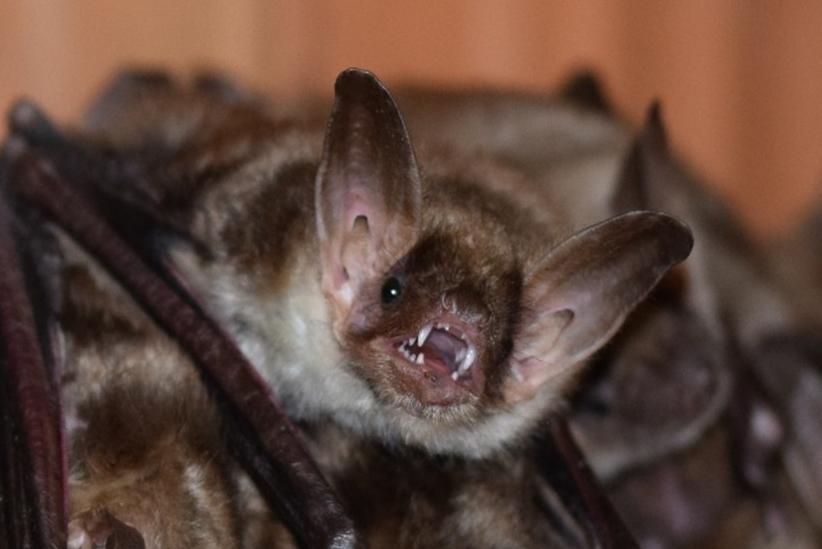
Male Greater Mouse-eared bats (Myotis myotis) have a lot to say – and each voice sounds different. A new study from the Museum für Naturkunde Berlin reveals that these bats not only possess a broad repertoire of vocalisations but also that their calls are individually distinct. The researchers found that males use their calls strategically: some are used to defend territories, while others are directed at potential mates.
As part of her doctoral research, funded by the Deutsche Bundesstiftung Umwelt (DBU), Lisa Printz recorded thousands of bat vocalisations over a three-year period in churches and attics across Bavaria. She identified 14 distinct call types, ranging from aggressive calls to complex courtship trills. Particularly interesting are the so-called FM trills – courtship vocalisations used both to mark territories and to attract females. Each of these trills carries an individual signature, allowing the identification of individual males by sound alone.
“Our results show that the males’ courtship vocalisations are highly complex and bear individual features, much like an acoustic fingerprint,” explains Lisa Printz. “These differences may help females to recognise and selectively choose a suitable partner.”
The study also revealed distinct seasonal patterns: at the beginning of summer, aggressive calls are more common, while courtship trills peak later in the season during the main mating period. This seasonal dynamic reflects the interplay between territoriality and mating behaviour.
The new findings are significant not only for behavioural research but also for conservation. “Through acoustic analyses, we can identify important mating roosts and detect particularly sensitive phases without disturbing the bats,” says Mirjam Knörnschild from the Museum für Naturkunde Berlin. “This allows us to better plan restoration work and protect important mating roosts more effectively.”
This has direct conservation implications: up to now, protection measures have focused on maternity roosts and hibernation sites, while mating roosts have received less attention. However, the new study shows that males use their mating roosts over many years. Renovation or construction work at the wrong time can therefore seriously disrupt mating activity.
With their work, the researchers provide valuable insights into the social communication and reproductive behaviour of one of Europe’s most common bat species. At the same time, the bioacoustic approach offers new possibilities for making bat conservation more effective and less invasive.
Publication:
Printz, L., Fernandez, A. A., Nagy, M. & Knörnschild, M. (2025). Fighting and Flirting: The vocal repertoire of the Greater Mouse-eared Bat in mating roosts and its seasonal variation. Animal Behaviour. https://www.sciencedirect.com/science/article/pii/S0003347225003677
Pictures:
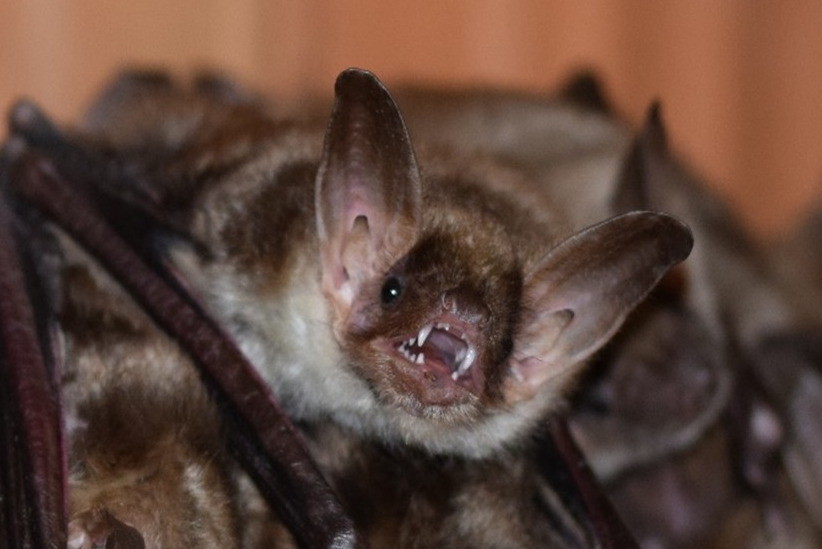
1) Greater Mouse-Eared Bat (Foto: Lisa Printz)
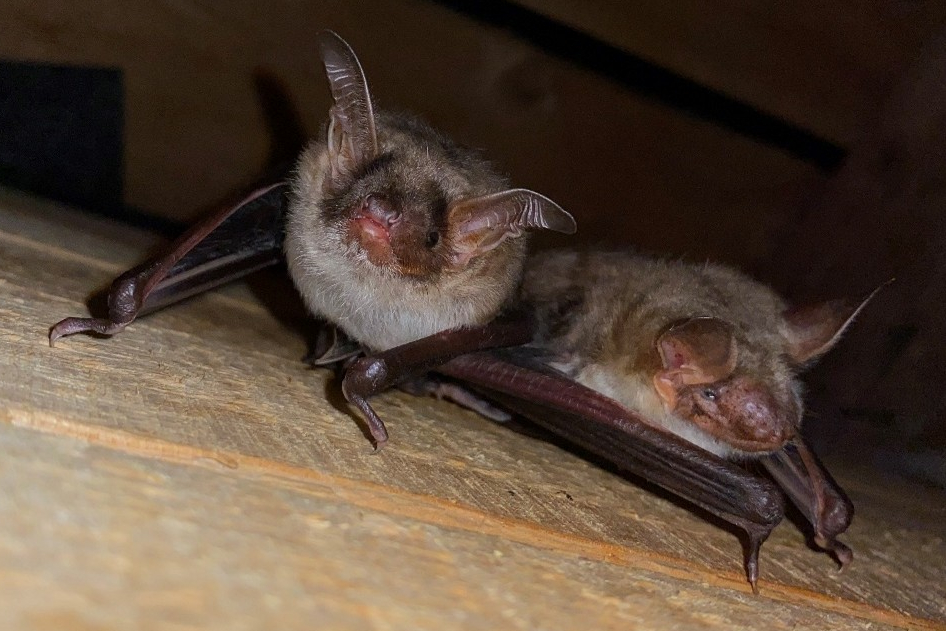
2) Female and male in mating roost (Foto: Lisa Printz)
 Lisa Printz
 Lisa Printz