New research conducted by palaeontologists from the Museum für Naturkunde (MfN), Humboldt-Universität zu Berlin (HU) and the CNRS (France) documents the earliest occurrence of a fossilised regurgitation (regurgitalite) produced by a strictly terrestrial predator from the early Permian Bromacker locality. Lead by MfN doctoral researcher Arnaud Rebillard, the international team identified the bone content preserved within the regurgitation and discovered remains belonging to three animals of different species and body sizes. This discovery provides the first direct insight into feeding behaviour and trophic interactions within a terrestrial ecosystem, dating back approximately 290 million years. The results are published this week in the open-access scientific journal Scientific Reports.
Understanding the behaviour of ancient animals, especially their feeding habits, is one of the greatest challenges in palaeontology, particularly in terrestrial environments and as early as the Palaeozoic. Fossilised digestive remains such as coprolites (fossilised excrements), are crucial for understanding past food webs, but these remains are mostly preserved in aquatic environments like lakes and oceans. As a result, the feeding habits of land animals is rarely documented.
Within the framework of the BROMACKER project, which focuses on the early Permian fossil site of the same name in Thuringia, a curious new fossil has been discovered. It is a compact cluster of bone remains, a unique find at this site. An international team led by Arnaud Rebillard, gathering palaeontologists from the Berlin Museum of Natural History (MfN), Humboldt University (Berlin) and the CNRS (France) conducted an in-depth study to identify and interpret this mysterious fossil.
Initially thought to be a coprolite, the team’s multidisciplinary approach reveals that this fossil is in fact a regurgitalite, a fossilised regurgitation. This distinction is based on both the morphological appearance and the elemental composition of this bone cluster. Coprolites generally have relatively regular shapes (cylindrical or conical, for example), and the bones they contain are trapped in a sedimentary matrix of organic origin, distinct from the surrounding sediments. This mineralized matrix is often rich in phosphorus, the result of bacterial activity related to bone digestion, particularly in carnivores. In contrast, the bones of the specimen studied in this research are not surrounded by a discernible matrix. Furthermore, micro-XRF elemental analysis of the specimen reveals a very low concentration of phosphorus in the matrix surrounding the bones, which is characteristic of regurgitalites.
Many modern predators regurgitate part of their meal, especially the more difficult-to-digest parts such as bones, teeth, or even hair, in order to conserve energy. However, this phenomenon is rarely preserved and identified in the fossil record, especially on land. In fact, the specimen found at Bromacker represents the oldest and first Palaeozoic regurgitalite produced by a predator living in a strictly terrestrial depositional environment.
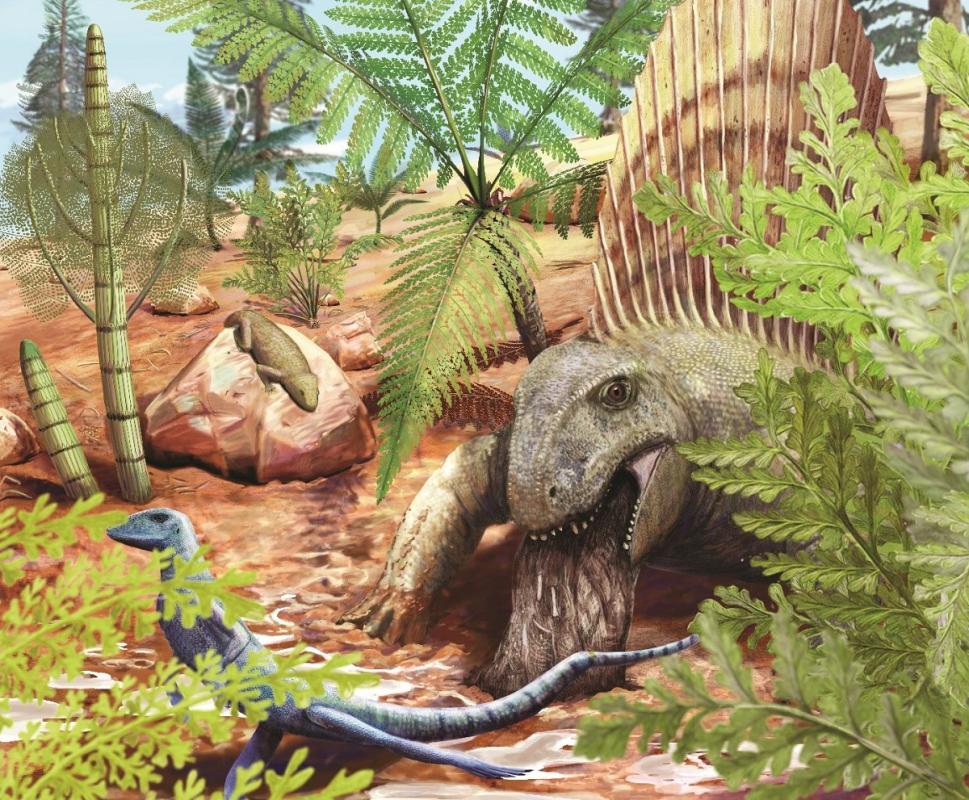
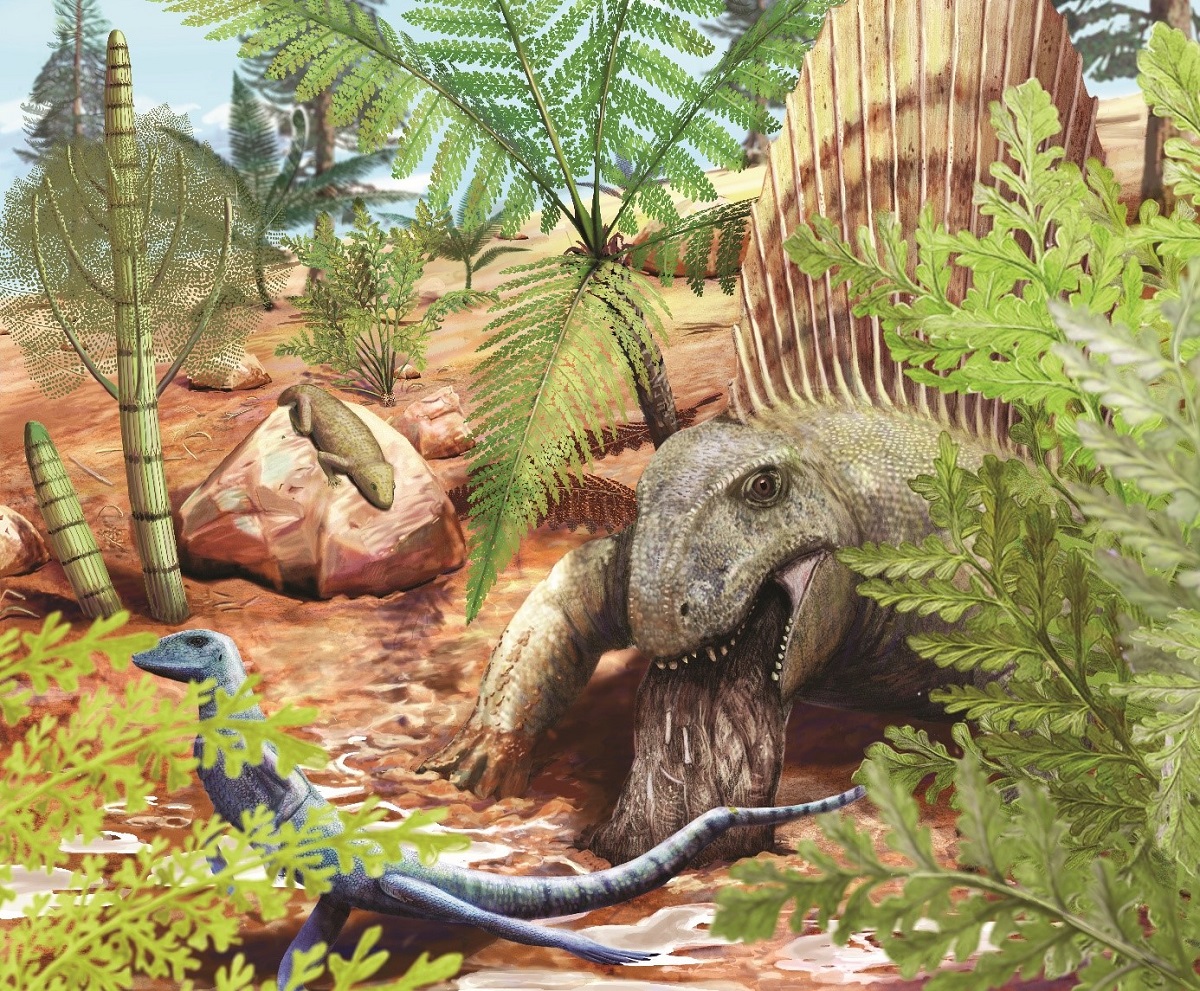
The specimen was scanned using computed tomography in order to reconstruct each of the bone remains in three dimensions, an important step in identifying the bones and attributing them to specific animals. A almost complete maxilla allowed the identification of the small captorhinomorph Thuringothyris mahlendorffae. Long bones, in particular a humerus, allowed the identification of the bolosaurid Eudibamus cursoris. Finally, a metapodial bone, with a unique morphology and size compared to the other remains, was found, belonging to a diadectid, herbivore of a much bigger size compared to the other two taxa. In total, at least three land vertebrates of different species and sizes were ingested and then partially regurgitated by the same predator. Only two predators large enough to have ingested these animals are known from the Bromacker locality, both representing early mammal relatives: the iconic and sail-backed sphenacodontid Dimetrodon teutonis and the varanopid Tambacarnifex unguifalcatus. This study thus demonstrates opportunistic feeding behaviour in a strictly terrestrial apex predator and offers a unique window into the food chain of a Paleozoic terrestrial ecosystem.
Publication: Rebillard, A., Jannel, A., Marchetti, L., MacDougall, M J., Hamann, C., Steyer, J-S., Fröbisch, J. (2026): Early Permian terrestrial apex predator regurgitalite indicates opportunistic feeding behaviour, Scientific Reports, doi: https://doi.org/10.1038/s41598-025-33381-0.
 Sophie Fernandez