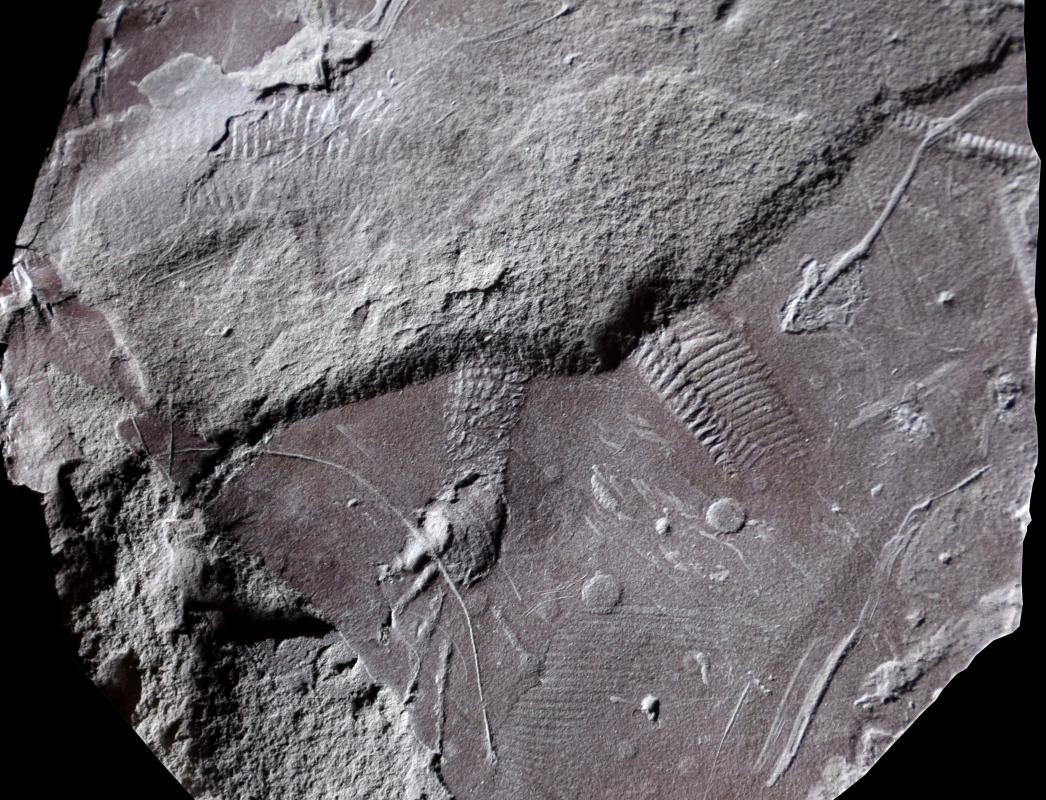
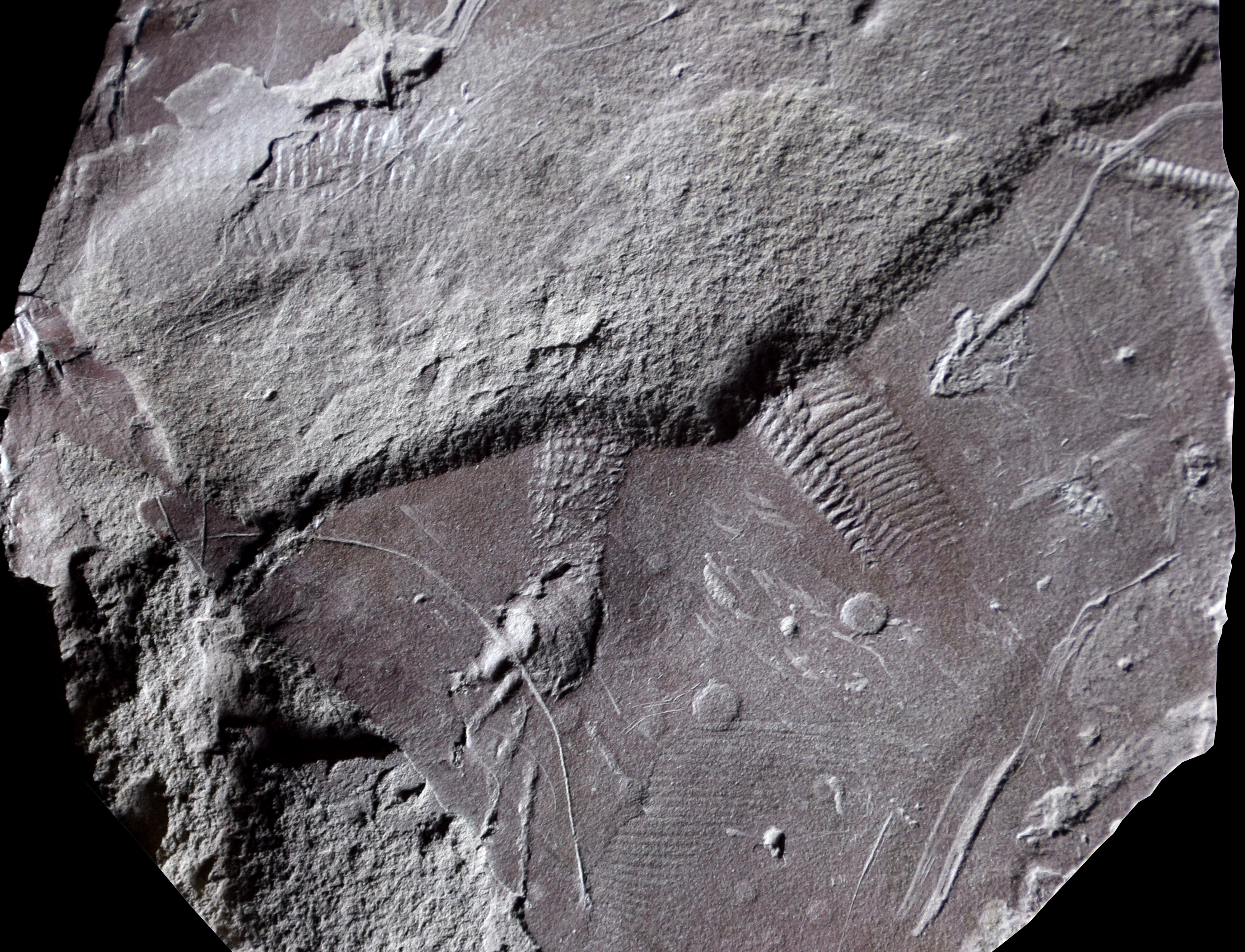
An international research team led by Dr. Lorenzo Marchetti from the Museum für Naturkunde Berlin has described the oldest known impressions of reptile skin from the Thuringian Forest in central Germany. Particularly remarkable is the possible preservation of a cloacal opening within the skin imprint. The fossils, dated to approximately 298 to 299 million years ago from the early Permian period, document detailed scale patterns of the stem group of modern reptiles for the first time. The results were published today in the scientific journal Current Biology.
The exceptionally well-preserved skin impressions were discovered in association with fossil resting traces and footprints of early reptiles within the Goldlauter Formation. The sites include the Cabarz quarry near Tabarz as well as Floh-Seligenthal. Modern radiometric dating of volcanic ash layers has enabled precise age determination, making these the oldest direct evidence of reptile skin known to date.
Skin structures such as scales, feathers, or horny beaks are known from numerous dinosaur fossils, sometimes preserved as organic material and sometimes only as surface impressions. “Such soft tissue structures are extremely rare in the fossil record — and the further back we look in Earth’s history, the more exceptional they become,” explains Dr. Lorenzo Marchetti. “The traces from the Thuringian Forest open new perspectives on the early development of reptiles and their skin structures.”
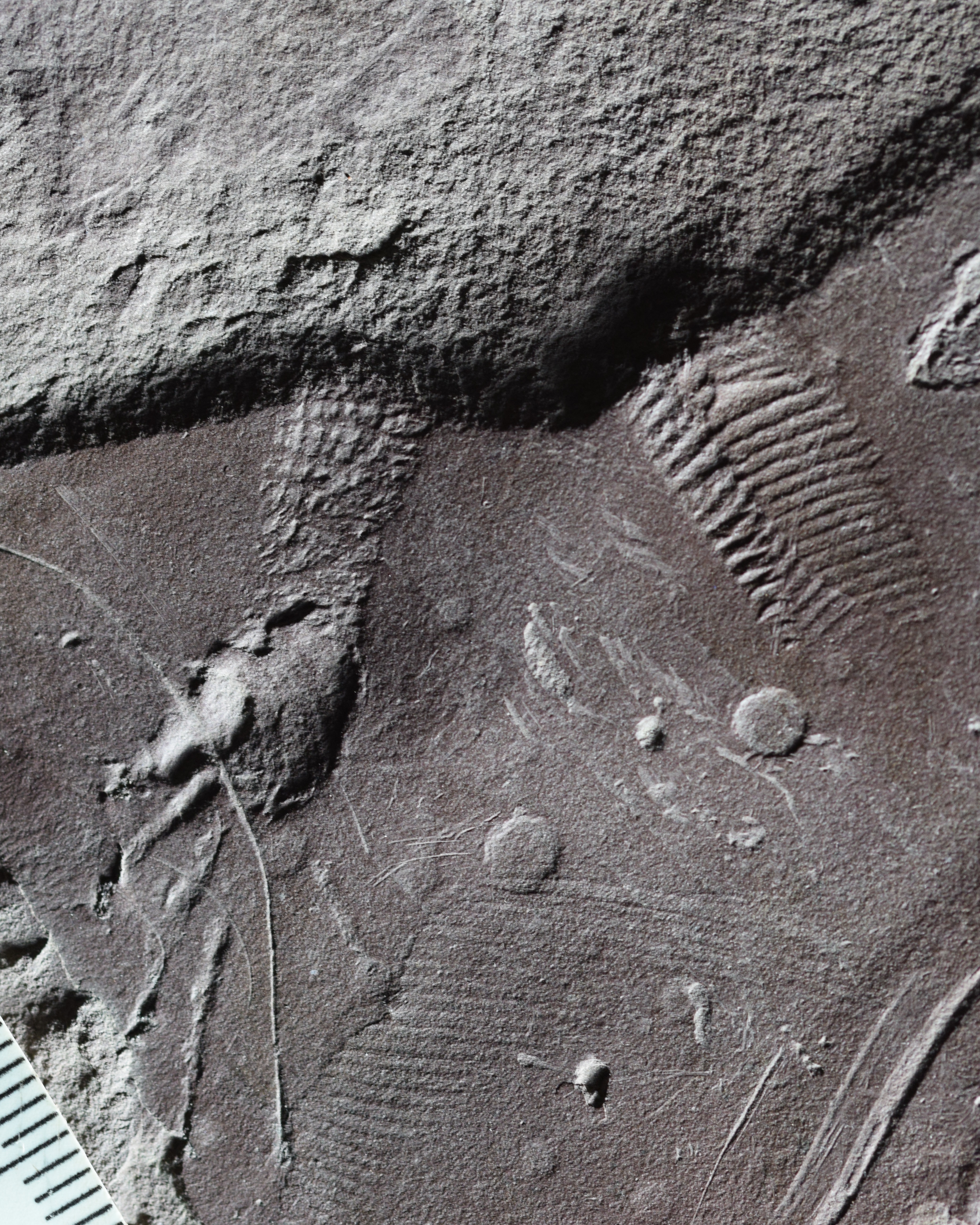
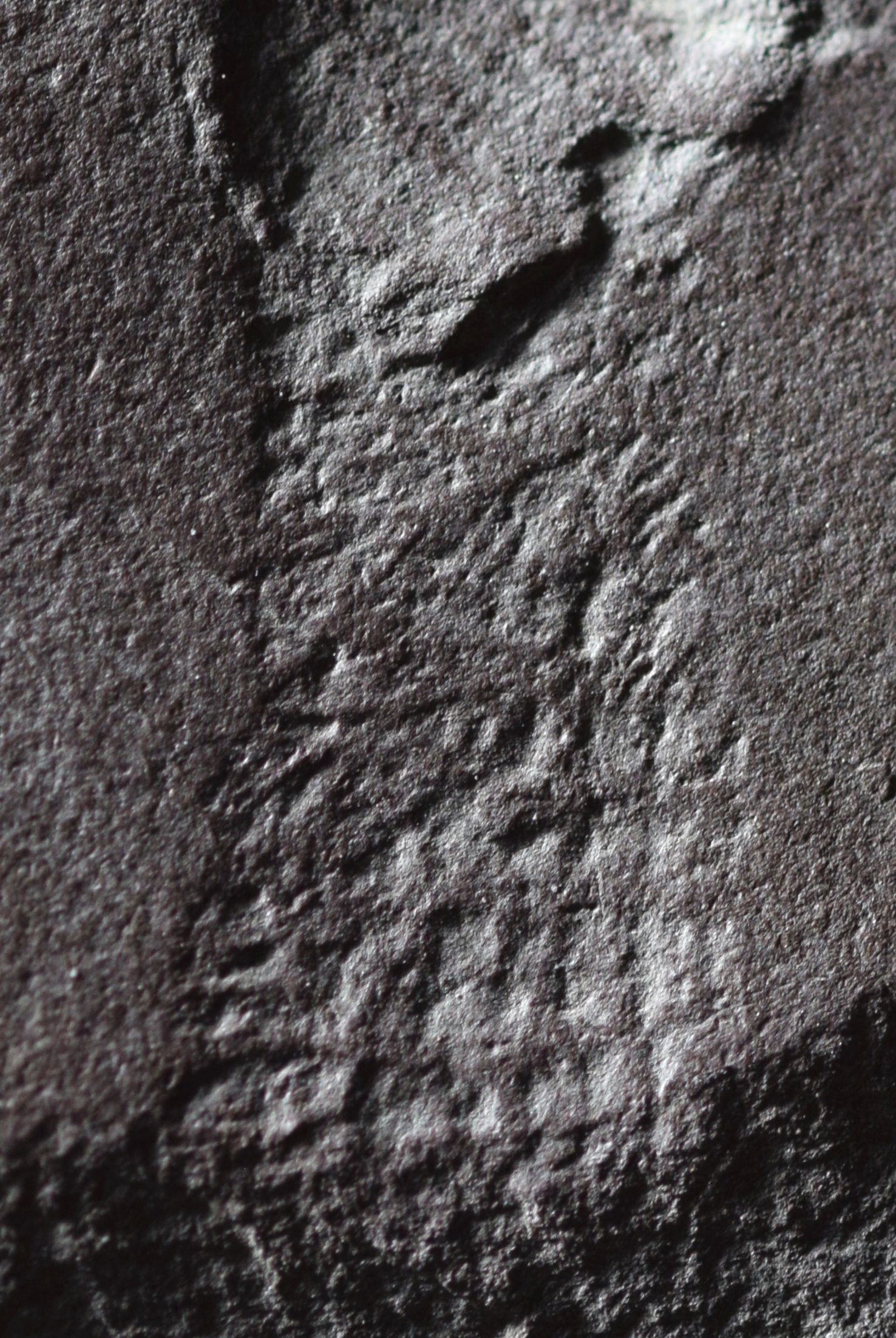
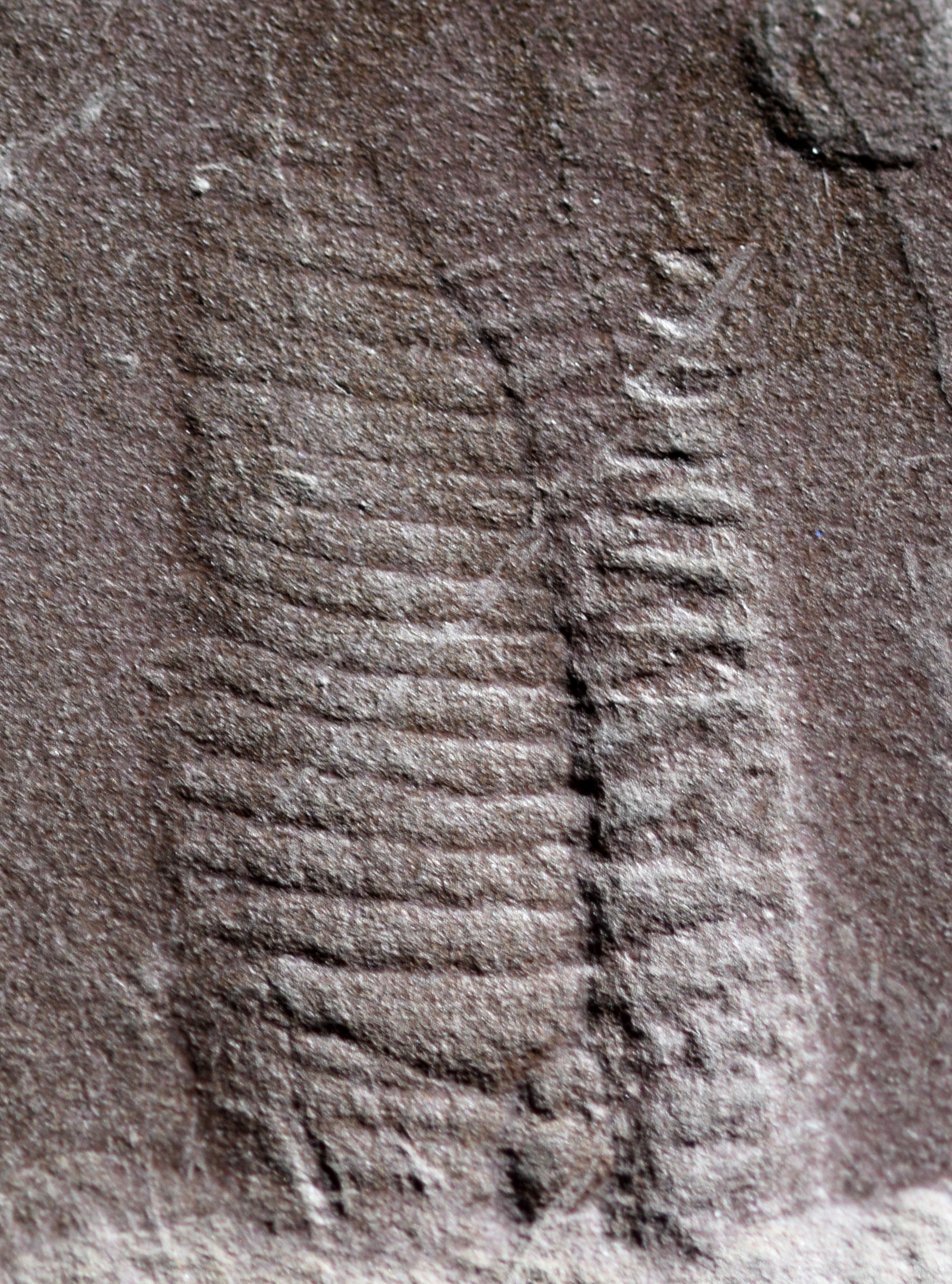
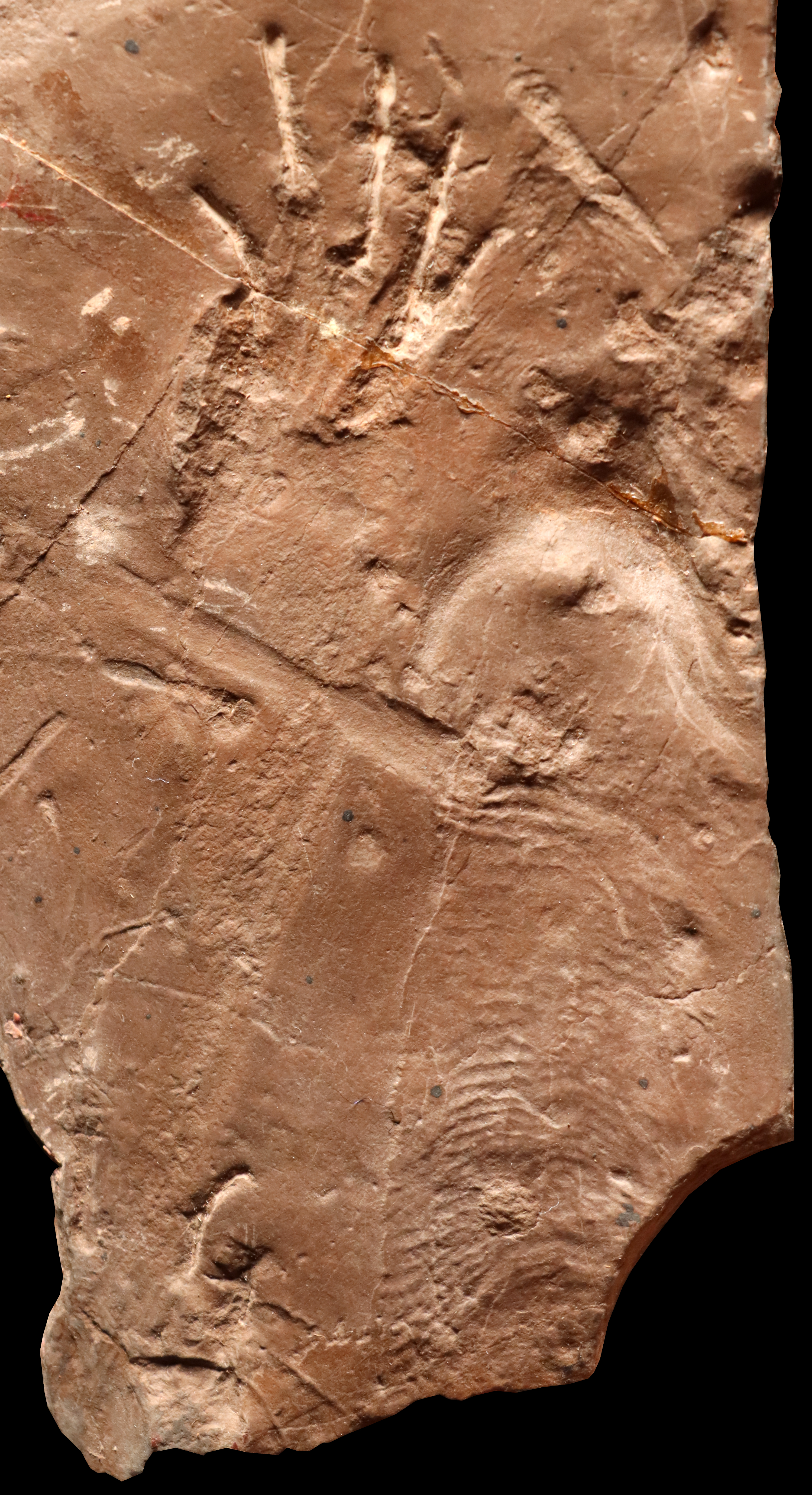
The newly described resting traces have been named Cabarzichnus pulchrus. The associated footprints display proportions similar to those of bolosaurians, an early reptile group belonging to the stem lineage of modern lizards. The scale shapes range from diamond-shaped to hexagonal and laterally pointed forms, showing remarkable similarities to skin structures observed in later groups of terrestrial vertebrates.
Particularly extraordinary is the potential evidence of a cloacal opening preserved near the base of the tail in one of the skin impressions. Most terrestrial vertebrates possess a cloaca — a single opening used for excretion and reproduction. Only placental mammals have separate openings. In the fossil record, the cloaca as soft tissue is almost never preserved in a clearly recognizable form. However, the Cabarz specimen shows a narrow slit-shaped impression near the tail base, suggesting that the cloaca of the Cabarzichnus tracemaker differed in shape and orientation from that of dinosaurs and crocodiles and more closely resembled those of turtles, lizards, and snakes.
By documenting these resting traces from the Thuringian Forest as part of the recently completed BROMACKER research project (funded by the German Federal Ministry of Research, Technology and Space - BMFTR) , Dr. Marchetti and colleagues highlight the importance of trace fossils for evolutionary research. Their work demonstrates that fossil tracks and impressions can provide crucial anatomical information that is rarely preserved in skeletal remains.
“Trace fossils are far more than simple footprints,” says Dr. Marchetti. “They preserve anatomical details that would otherwise be completely lost and play a key role in improving our understanding of the evolution of early terrestrial vertebrates.”
Publication: Marchetti et al., The earliest reptile body impressions with scaly skin, Current Biology (2026), https://doi.org/10.1016/j.cub.2026.01.036
Captions:
DSC_0655b - Holotype of Cabarzichnus pulchrus.
DSC_0675b - Holotype of Cabarzichnus pulchrus, resting trace of an early reptile.
DSC_0684b - Hindlimb impression of the holotype with rectangular scales.
DSC_0694b - Tail impression of the holotype with scaly skin and cloacal opening.
IMG_7799c - Paratype of Cabarzichnus pulchrus.
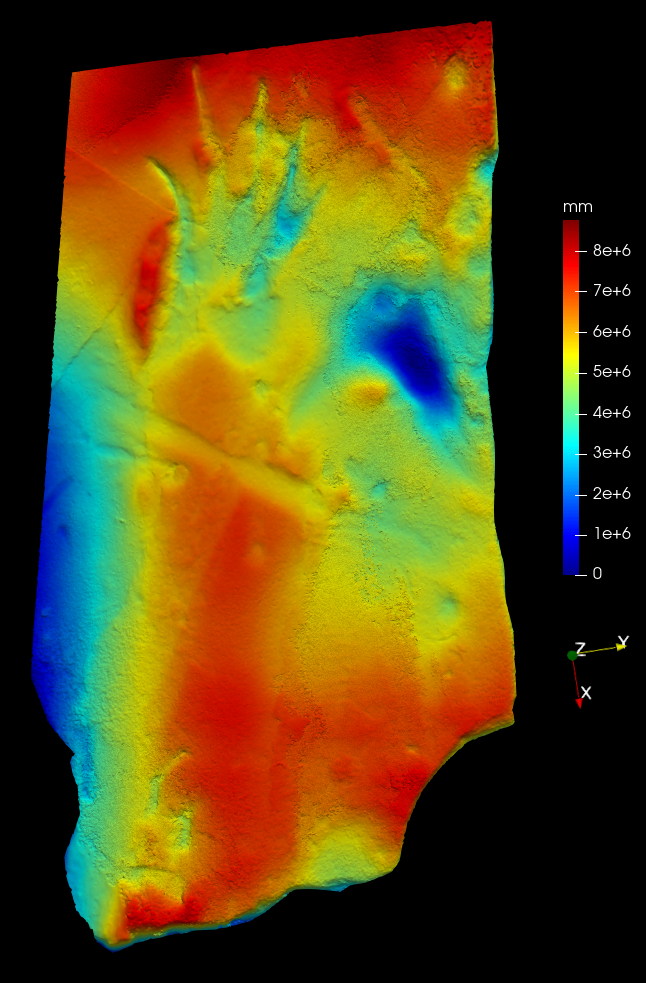
MNG 8786c - Colour depth map of the holotype from 3D model.
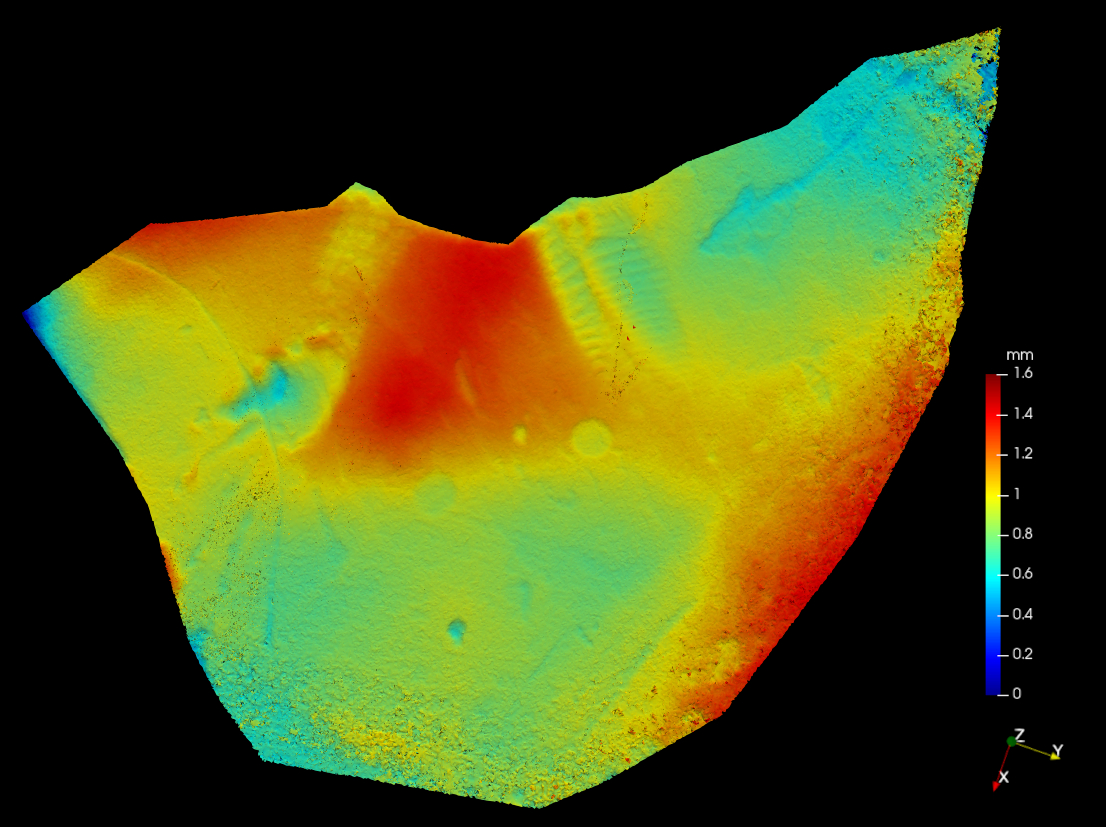
NHMS AF 7B - Colour depth map of the paratype from 3D model.
 © Lorenzo Marchetti
 © Lorenzo Marchetti
 © Lorenzo Marchetti
 © Lorenzo Marchetti
 © Lorenzo Marchetti
 © Lorenzo Marchetti
 © Lorenzo Marchetti