Skip to main content
Header Menu
Opening Hours
Location
Tickets
Press
News
Shop
Visit
Exhibitions
ZUGvögel
Zukunftsplan
Dinosaurs!
digitize!
The World of Dinosaurs
System Earth
The Cosmos and the Solar System
Evolution in Action
Wet Collection
Keller’s Insect Models
Highlights of taxidermy
Minerals
Humboldt Intervention
Touring Exhibitions
Archive: Special Exhibition
#fürNatur digital
Podcast Beats & Bones
Queering Nature
Podcast Süßes oder Saurier
Wie Gras
Plan Your Visit
How to get here
Accessibility
Visitors regulations
Digital Guide / Audioguide
Film and Photography
Museum Café
Museum Shop
Participate
Citizen Science
Volunteering
Education
Digital Offer
Guided Tours
School and Kindergarten
Families
Children’s Birthday Parties
Adults
Advanced Training
Partnerships and Projects
Events
Research
Research
Dynamics of Nature
Collection Future
Society and Nature
Infrastructure
Collection
Labs
Research Information Technology Infrastructure
Research Data Management Infrastructure
Transfer
Communicating
Advising
Applying
People Search
The Museum
The Museum today
The Museum
Building
Sponsors
Team
The Museum in the future
Future Plan
Collection discovery
Knowledge Transfer
Media
Press
News
"für Natur" Journal
Newsletter
Jobs & Career
Work here
Jobs
Enter your keywords
DE
EN
Enter your keywords
Search results
Fri | 10/02/2015 | 11:01
Evolution in Action
It is estimated that on the Earth, there are between 4 and 40 million plant and animal species. This overwhelming variety came about through evolution in the course of geological history. Over time, many organisms vanished, leaving nothing but fossil traces. Such traces increased continuously, and some of them have been preserved to this day. However, many species have not yet been discovered, while others are threatened with extinction. The idea of a common origin of all life goes back to Charles Darwin.
Press release,
08-08-2024
Open Museum
Event
Berlin Secrets at Naturkundemuseum
The Lange Nacht der Museum on 24 August is all about "Berlin Secrets". The Museum für Naturkunde Berlin exploring objects hidden in stone, buried in amber and wrapped in file covers.
Wed | 10/13/2021 | 12:49
Big data with ants and dinosaurs
30 million objects in the Museum für Naturkunde Berlin will be digitized over the next ten years
Tue | 12/15/2015 | 15:02
Book T. rex - MB.R.91216
T. rex as it has never been presented before
SP1 Dynamics of Nature
Evolutionary Morphology
Research
Morphology
Evolution
Fossils
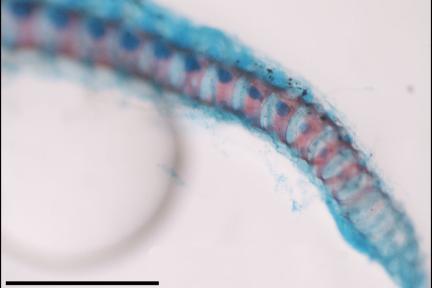
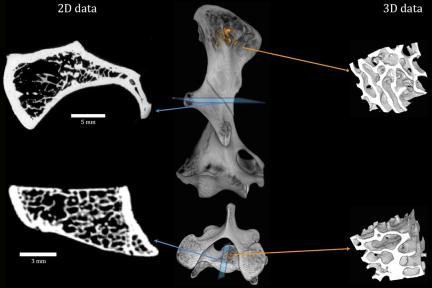
Developmental origin of tetrapod vertebral centra and the phylogenetic relationships of basal tetrapods and lissamphibians
Study of the histology, morphology and ontogeny of vertebrae of Paleozoic and Mesozoic basal tetrapods, tetrapodomorph fishes and extant lissamphibians.
SP1 Dynamics of Nature
Evolutionary Diversity Dynamics
Research
Biodiversity
Evolution
Fossils
Earth Sciences
Climate Change
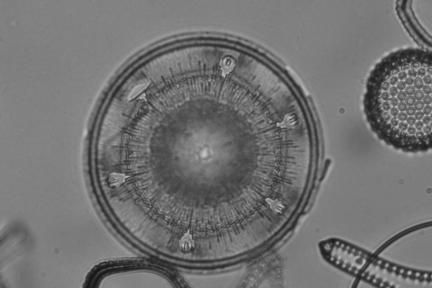
Predicting the future with plankton
Researchers are investigating the relationship between polar oceans in Paleogene, the development of plankton and future climate change.
Press release,
27-08-2025
Evolution
Research
Mammals
Two big steps toward the evolution of bipedality
New study reveals how reshaping the pelvis helped human ancestors walk upright
Tue | 06/14/2016 | 08:55
Spinosaurus
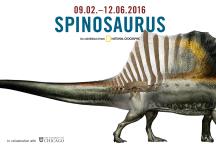
Die Sonderausstellung Spinosaurus wurde von National Geographic in Zusammenarbeit mit der University of Chicago konzipiert, und wurde vom 8.2. - 12.6.2016 im Museum für Naturkunde Berlin mit Ergänzungen des Museums gezeigt.
SP1 Dynamics of Nature
Evolutionary Morphology
Research
Morphology
Database
Mammals
Biodiversity
Evolution
Lifestyles of mammals
Mammals have adapted to occupy various environments, including the land, the air and the water. But not all evolutionary adaptations are as clearly recognizable as legs, wings or flippers.
SP1 Dynamics of Nature
Evolutionary Diversity Dynamics
Research
Extinction of Species
Fossils
Earth Sciences
Extinction selectivity during the latest Permian mass extinction
Investigating if ocean acidification had a major role in the extinctions in the oceans
Press release,
14-08-2025
Museum Visit
Open Museum
Event
Science Communication
Diverse love: Long Night of Museums at the Museum für Naturkunde
This year, the Long Night of Museums on 30 August will be held under the motto ‘Love’.
Wed | 10/13/2021 | 13:30
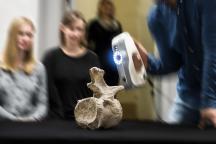
Insect hairs and dinosaur bones in 3D
The museum digitizes its objects using the latest methods. Scientists from all over the world will be able to research them on their home PC in the future.
Press release,
16-12-2015
Evolution
Finance
Cooperation
Saur
Special Exhibition
Future Plan
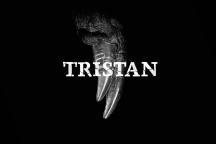
Tristan – Berlin bares Teeth
An original Tyrannosaurus rex skeleton goes on show at the Museum of Natural History Berlin
Tue | 12/15/2015 | 00:26
Touring Exhibition: Parasites – Life Undercover
Bring this exciting touring exhibition to your museum!
Sun | 12/05/2021 | 14:00
bis
16:00
Digital Science Communication Cafe
Bringing dinosaurs back to life
Wed | 04/03/2024 | 13:43
Meta Friese: The attorney of the objects
Since April 2021, Meta Friese has been responsible at the Museum für Naturkunde Berlin for ensuring that collection objects are treated well and that nothing happens to them.
Press release,
14-12-2016
Evolution
Fossils
Mammals
Evolution of the strong arms in moles
Hox genes take their part
Evolutionary Morphology
Research
Fossils
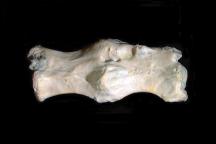
Paleopathology in Late Triassic phytosaurs
The scientist Dr. Florian Witzmann studies the prehistoric diseases and injuries (paleopathology) of extinct phytosaurs to draw conclusions about their lifestyle and behaviour.
Press release,
07-08-2019
Evolution
Research
Genomics
Laboratories
Morphology
Museum für Naturkunde Berlin detects the oldest viruses in the history of the earth
Permian lizard-like animal suffered from a bone condition similar to Paget’s disease
Press release,
04-11-2024
Research
Society
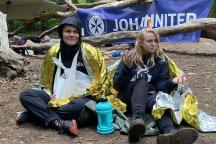
Berlin researchers train for exceptional medical situations away from civilisation der Zivilisation
Researchers from the Museum für Naturkunde Berlin are currently training for such or similar scenarios in a special outdoor first aid course.
Pagination
First page
« first
Previous page
‹ previous
…
Page
24
Page
25
Current page
26
Page
27
Page
28
Next page
next ›
Last page
last »
Cookies
Privacy settings
Settings
Accept essential
Accept all
Cookies
back
Privacy settings
Apply settings