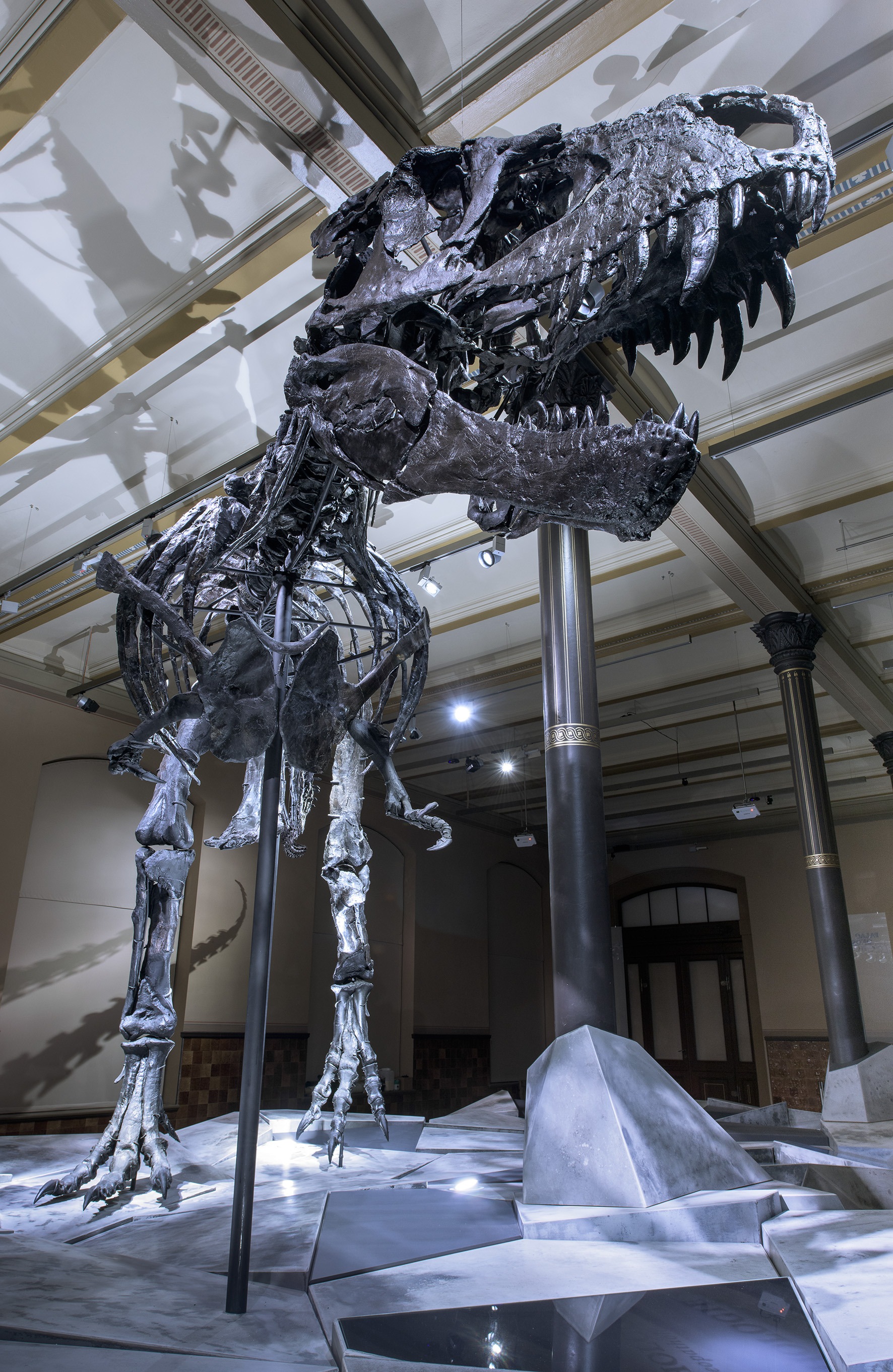
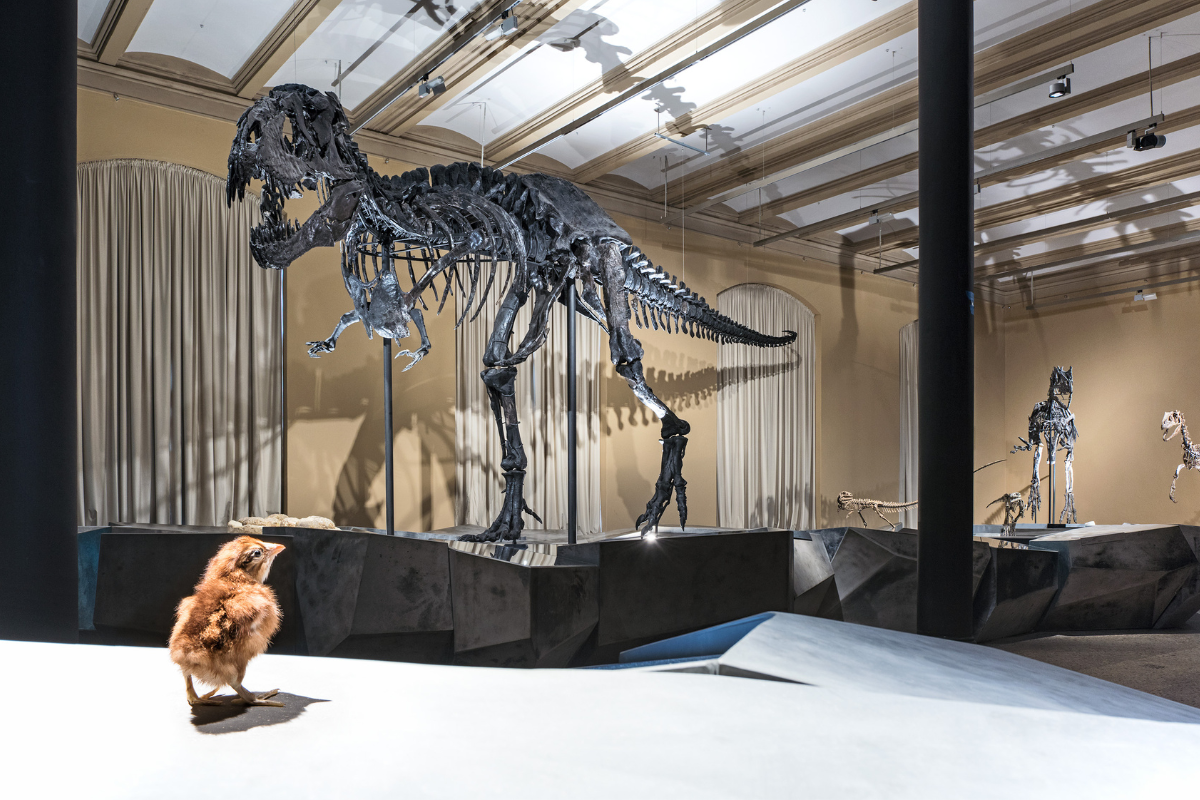
Since his arrival on 16 December 2015 – at the time the first original T. rex skeleton ever to be exhibited in Europe – Tristan Otto has been far more than a spectacular dinosaur skeleton. The twelve-metre-long Tyrannosaurus rex has become a cultural landmark and an international crowd magnet, with a measurable impact on tourism, research, and Berlin’s city image.
Hardly installed, Tristan Otto quickly rose to become an absolute visitor attraction. In the years before the COVID-19 pandemic (2016–2019), the Museum recorded up to 821,489 visitors per year thanks to Tristan Otto. As early as March 2017, the one-millionth visitor was celebrated.
Even his temporary absence made history: the loan to the Natural History Museum in Copenhagen (2020–2022), as well as his return in August 2022, generated headlines across Europe, long queues, and enormous media attention. In 2022, the Museum reached 730,000 visitors, returning to pre-pandemic levels – a success largely attributed to Tristan Otto’s comeback. On the final exhibition weekend before his departure in January 2020, 25,000 fans came to say goodbye.
Science You Can Experience
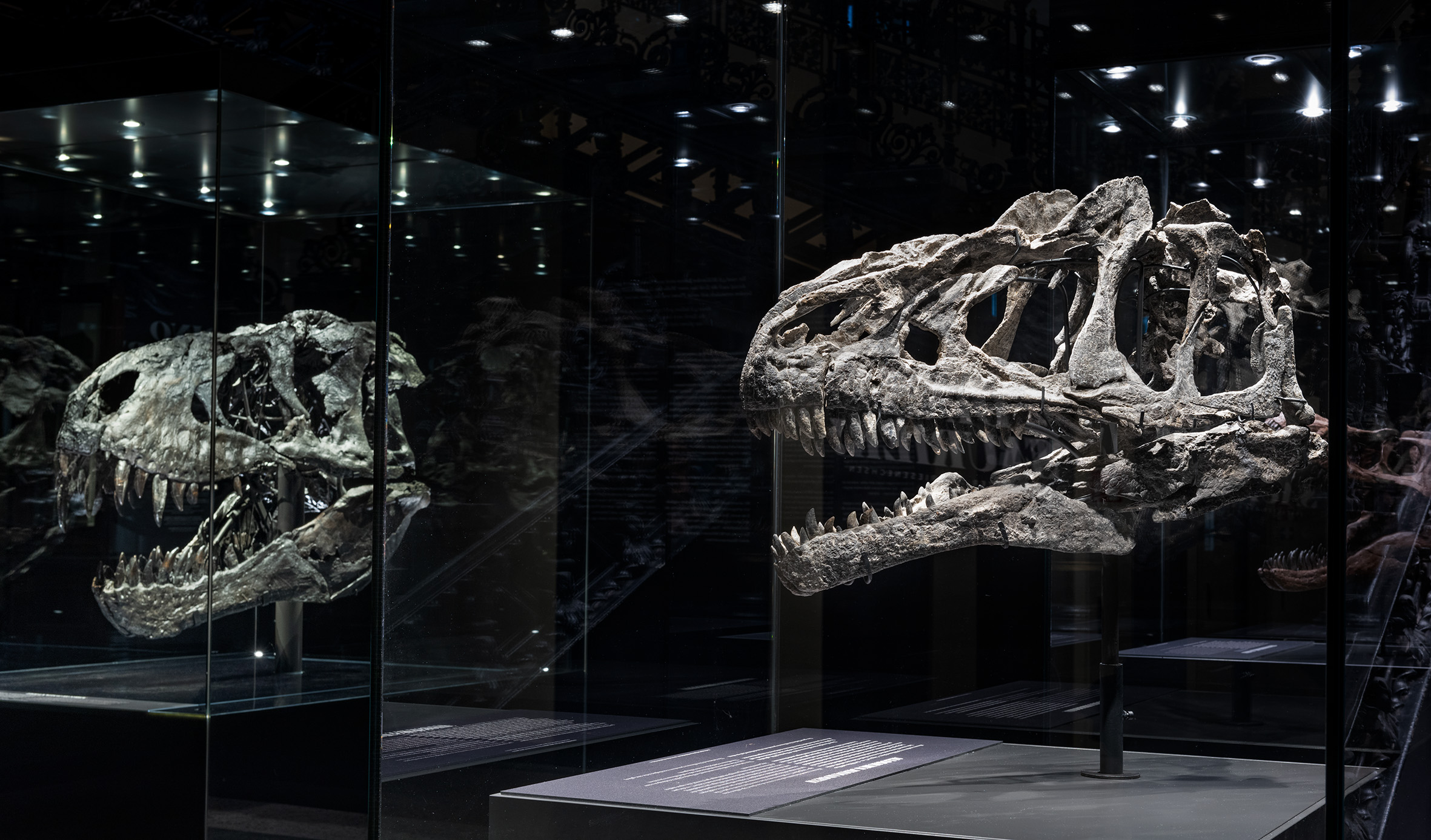
With around 170 preserved bones, Tristan Otto is among the most complete T. rex skeletons worldwide. His skull, at 98 percent completeness, is the best-preserved of its kind. For researchers, he is a true treasure: modern scans of his bones allow conclusions to be drawn about nerve size, sense of smell, and the lightweight construction of the skeleton, and enable comparisons with modern birds. Discovered traces of disease, including indications of a bone tumour and tooth pain, also provide rare insights into the individual life of this animal 66 million years ago. His deep-black coloration, typical of fossils from the Hell Creek Formation in Montana (USA), gives him additional visual impact and quickly turned him into an icon.
Despite being privately owned, Tristan Otto is fully accessible for scientific research, officially inventoried, and secured for long-term study and exhibition – a model example of cooperation between private ownership and public science. We extend our heartfelt thanks to our patron for the outstanding collaboration.
Berlin’s Strongest Brand Ambassador from Deep Time
Whether as the face of international campaigns such as #popintoberlin or as the embodiment of the slogan “Berlin shows its teeth,” Tristan Otto represents the German capital as a world city of science, culture, and curiosity. Few exhibits combine fascination, knowledge transfer, and image-building so impressively.
In total, exactly 5,764,218 people have visited Tristan Otto since 2015. Behind this number are enthusiastic tourists, thousands of young adults, wide-eyed children, and researchers from around the world. Tristan Otto is not only a relic of Earth’s deep history, but a living part of the Museum’s and the city’s story – powerfully demonstrating how strongly science can move people.
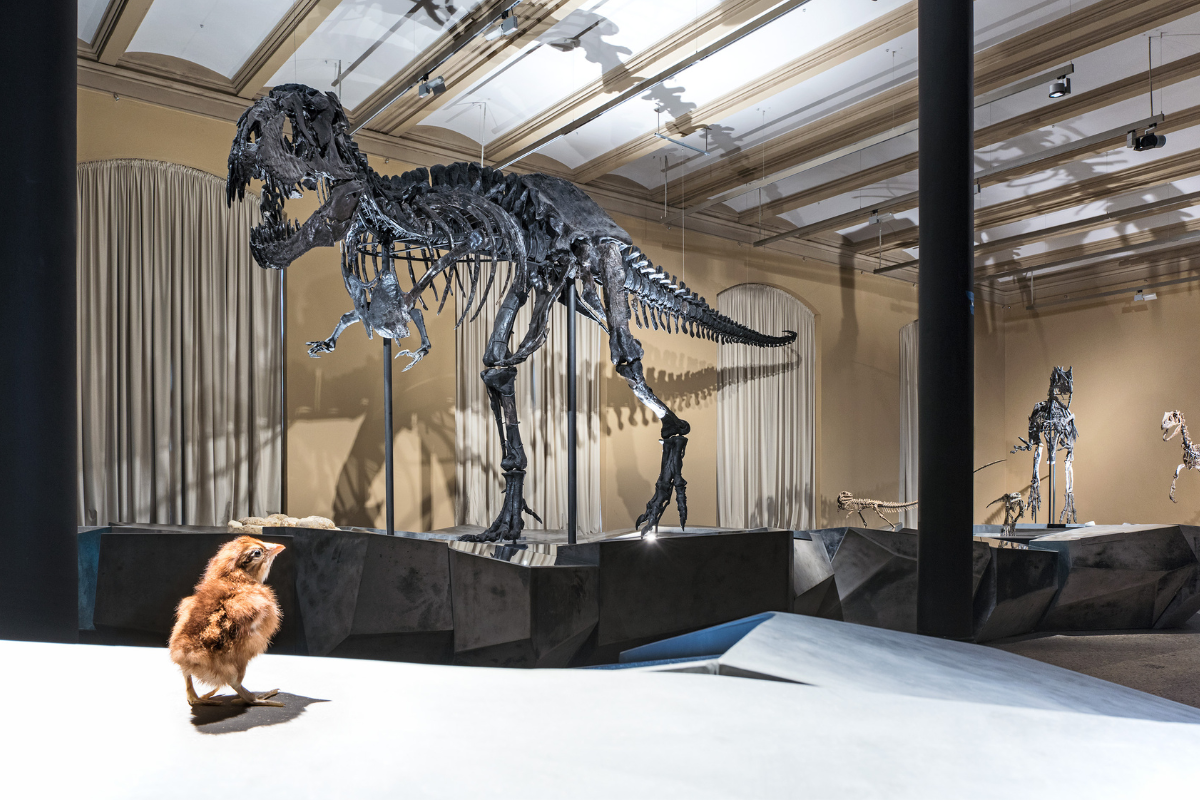 DINOSAURIER! Tristan Otto und Küken
(c) Carola Radke
DINOSAURIER! Tristan Otto und Küken
(c) Carola Radke